
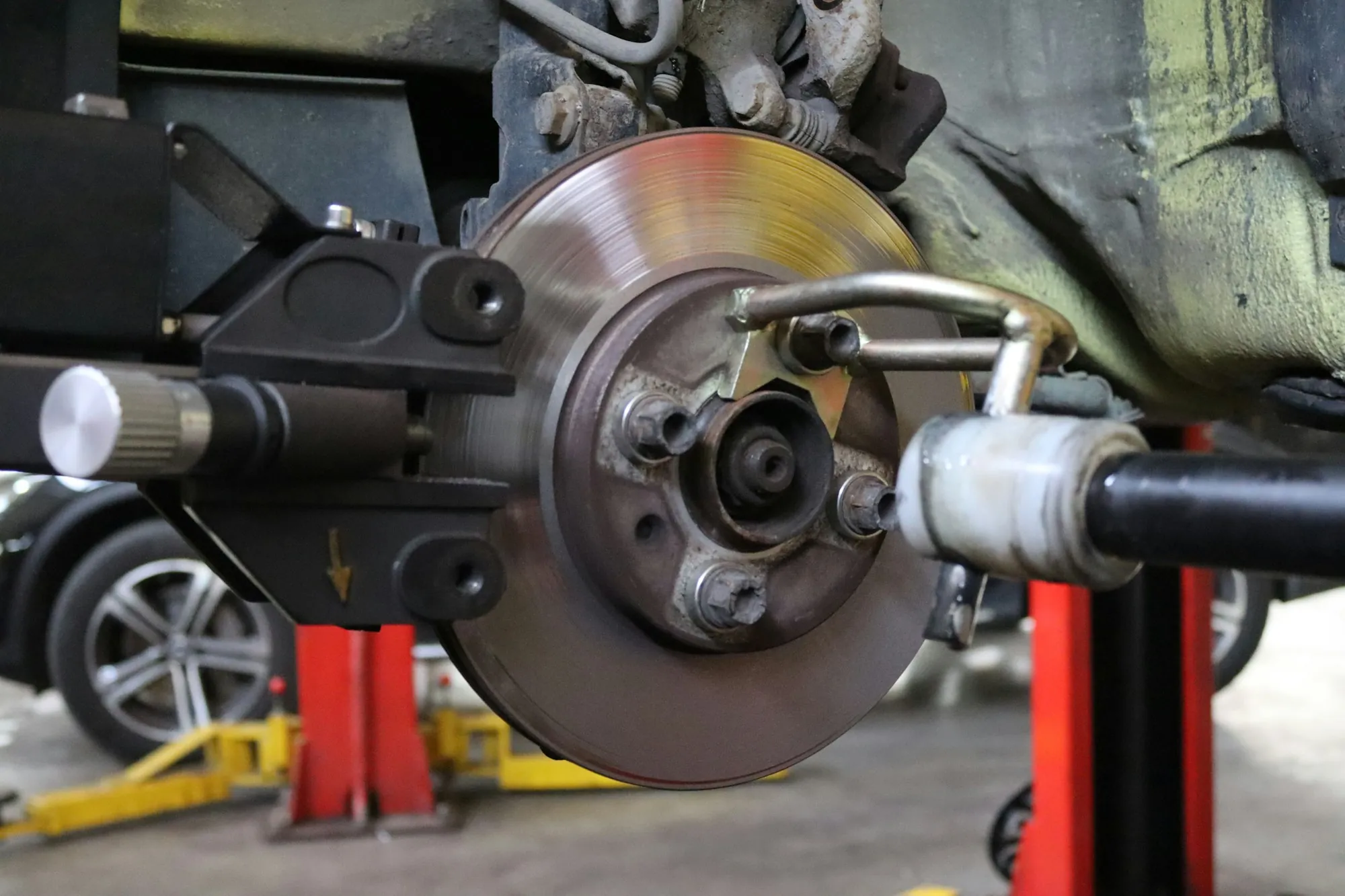
Brake Repair in Georgetown With a Free Inspection to Start
Find out exactly how much life your pads and rotors have left, at no charge, before you decide on any brake work.
Book a free brake check — (720) 315-7158Start With What Your Brakes Actually Need
Brakes rarely fail all at once. Pads thin out, rotors develop a ridge or a warp, caliper pins dry up and the fluid slowly takes on water. On the run down from the Eisenhower Tunnel toward Georgetown, all of that wear shows up as heat, noise or a pedal that feels different from last month.
Our free inspection puts a number on each of those things. You find out the pad thickness at every corner, whether the rotors are still within spec and how the calipers and fluid look. Then you get a short, ranked list: what has to be done for the vehicle to stop safely, and what is simply getting close.
That way a brake visit never turns into a surprise four-wheel job when only the front axle needed attention.
Signs It Is Time for Brake Work
- A high squeal that comes and goes as you brake
- Grinding or scraping, which usually means metal on metal
- A pulsing pedal or a shaking steering wheel when slowing down
- The pedal sinks lower or feels soft and spongy
- The vehicle drifts left or right when you brake
- An ABS or brake warning light on the dash
What the Brake Service Covers
Corner-by-corner measurement
Pad and rotor thickness recorded at all four wheels so you can see exactly which axle needs work.
Pads matched to your driving
Commuter, towing and mountain-grade driving each get a pad compound suited to the heat they generate.
Rotor resurfacing or replacement
Lightly scored rotors with thickness to spare are resurfaced; thin or warped ones are replaced.
Caliper and slide service
Pins cleaned and greased, or a sticking caliper replaced, so pads release properly and wear evenly.
Hydraulic system check
Hoses, lines and the master cylinder inspected for leaks, swelling or corrosion.
Fluid exchange
Moisture-laden brake fluid replaced to restore a firm pedal and protect the ABS unit.
ABS fault tracing
Sensor, wiring and module tests when the anti-lock or traction light is on.
Bed-in and road test
New pads seated properly, then a test drive to confirm straight, quiet stops.
Your Brake Visit, Step by Step
Call
Tell us what you are hearing or feeling and book a drop-off time.
Inspect free
Wheels come off and every brake part is measured and checked at no charge.
Decide
You get the ranked findings and a total price per axle, and choose what to fix.
Repair and test
Approved work is completed, often the same day, and road tested before pickup.
Brake Questions We Hear Often
Do I always need new rotors with new pads?
No. If the rotors are still above the minimum thickness stamped on them and are not warped or deeply grooved, they can stay or be resurfaced. We measure them and show you the numbers before recommending either.
Why do my brakes squeal only in the morning?
A light squeal on the first few stops of a damp or cold morning is often surface rust on the rotors and goes away quickly. A squeal that persists all day usually means the pads are worn to their indicators.
Know Your Brake Numbers Before You Spend
A free check tells you whether you need pads now, next season or not at all. Call to set it up.
Get the free brake check — (720) 315-7158