
Check Engine Light Diagnostics in Georgetown
Find out what the light really means, from a test that confirms the cause, before you pay for a single part.
Ask about your warning light — (720) 315-7158Clearing the Code Is Not the Same as Fixing It
Anyone can plug in a reader, clear the code and send you on your way, and the light will often return within a week. The code only names the system that noticed a problem. Finding the component behind it takes testing, and that is where we spend our time.
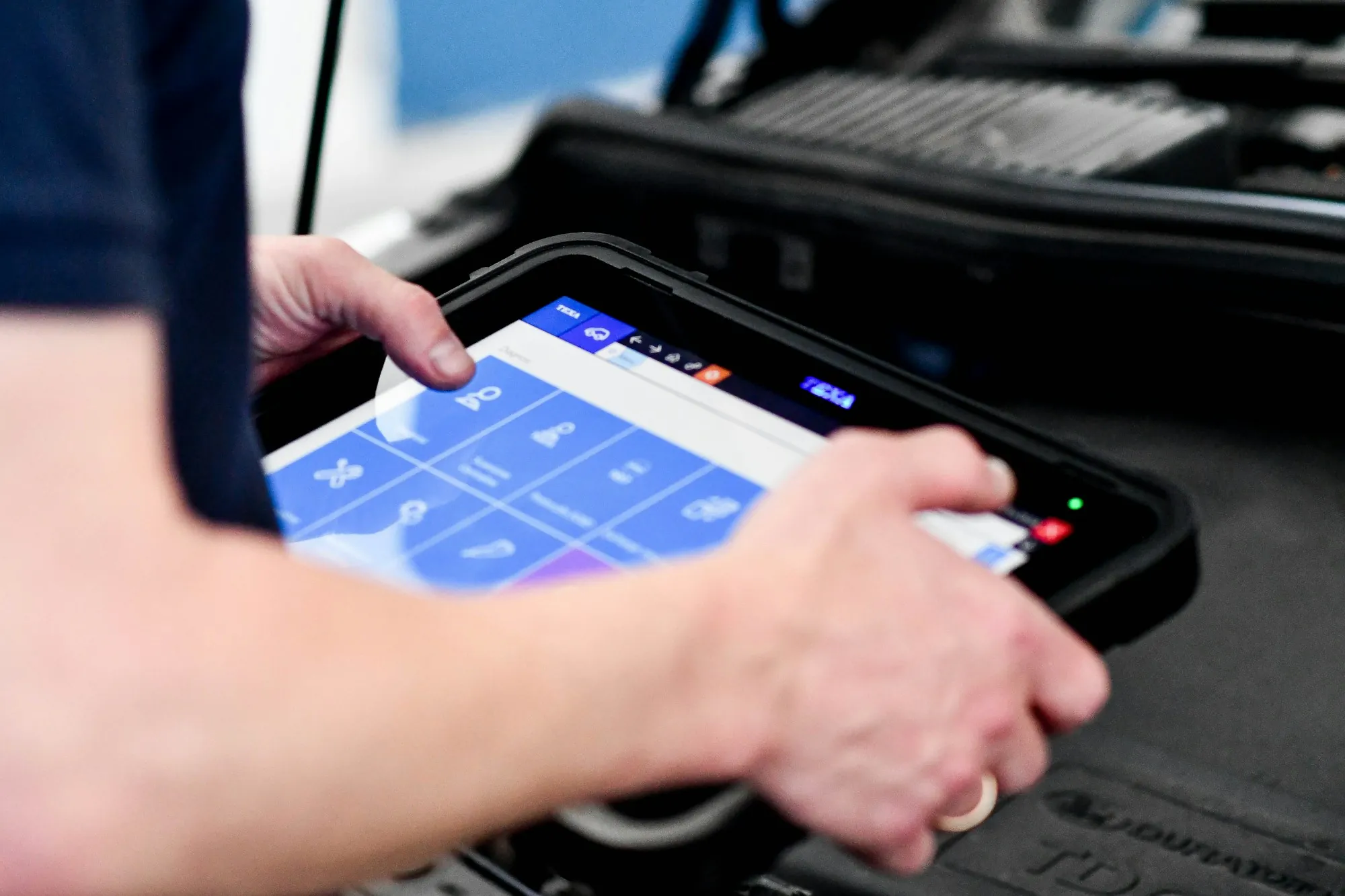
We record the freeze-frame data showing exactly when the fault set, watch live sensor values on a drive and then test the suspects one at a time: a smoke test for leaks, fuel pressure, ignition output, wiring voltage and grounds. The answer comes with the evidence behind it.
Plenty of check engine faults show up only at altitude or under load on a grade. If yours is one of those, we test it in the conditions where it happens.
When to Get the Light Checked
- The check engine light is on and stays on
- The light is flashing, which signals an active misfire
- The engine hesitates, stumbles or idles roughly
- Fuel economy has dropped without explanation
- The vehicle failed an emissions readiness check
- A code keeps returning after being cleared
What Diagnosis Involves
Full-system scan
Codes read from the engine, transmission and body modules, including pending and history codes.
Freeze-frame review
Engine speed, load and temperature at the moment the fault set, which narrows the cause.
Live data on a drive
Sensor readings watched in real time to see which value goes out of range.
Smoke leak test
Visible smoke shows exactly where a vacuum or evaporative leak escapes.
Fuel and ignition tests
Pressure, injector and coil checks that separate fuel faults from ignition faults.
Circuit testing
Voltage drop and ground checks, since a good sensor on a bad wire throws the same code.
Confirmation
The suspected part is proven faulty before it is recommended for replacement.
Plain-language report
What failed, how we know, what it costs to fix and how urgent it is.
How a Diagnostic Visit Runs
Describe it
Tell us whether the light is steady or flashing and how the vehicle is behaving.
Scan and test
We read the data and run the tests the code and symptoms point to.
Get the answer
You hear the cause, the evidence and the repair price before anything is replaced.
Fix and verify
After the approved repair we clear the code and drive the vehicle to confirm it stays off.
Warning Light Questions
Can a loose gas cap really turn the light on?
Yes. A cap that does not seal lets fuel vapor escape, and the evaporative system flags it as a leak. It is worth checking the cap first, but if the light stays on after a few drive cycles, the leak is usually somewhere else.
Will the light go off by itself?
Sometimes, if the fault was temporary. The code stays stored in memory, though, and an intermittent fault tends to return. Testing while the code is fresh gives the best chance of finding it.
Turn the Light Into a Clear Answer
Call and tell us what the dash is showing. We will explain what testing involves and book the vehicle in.
Book a diagnosis — (720) 315-7158